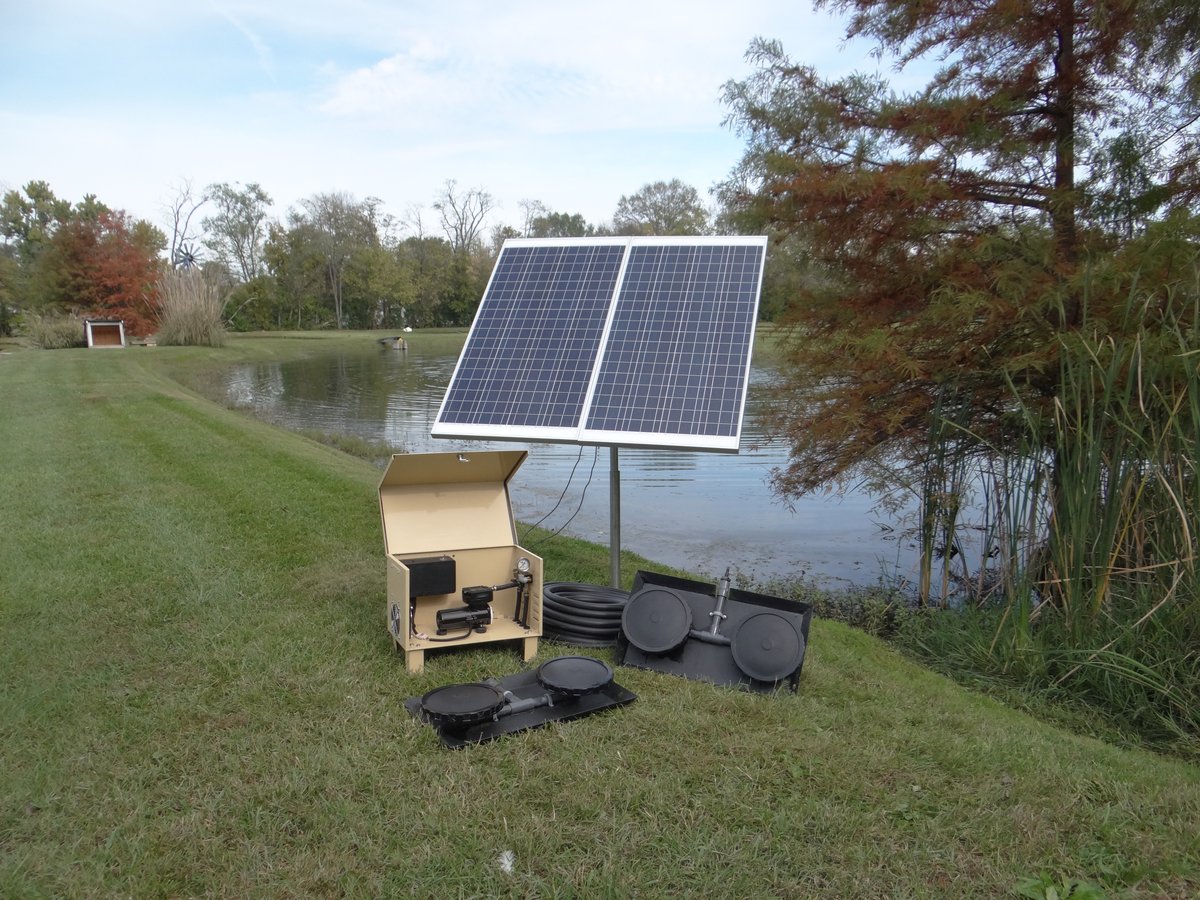
Across the southeastern United States, pond owners rely on aeration to keep water clean, oxygenated, and balanced. In states like Georgia, Alabama, and Arkansas, long periods of sunshine create excellent conditions for solar-powered aeration systems.
Traditional aeration systems typically rely on electricity, which can require trenching power lines to reach the pond. For rural properties, farms, and large landscapes, installing electrical service near the shoreline is not always practical.
Solar aeration offers an alternative. By using solar panels to generate power, these systems circulate water and increase oxygen levels without relying on nearby electrical infrastructure. While solar aeration systems generally require a higher upfront investment, they provide a renewable energy solution for maintaining pond health.
Solar-powered fountains and diffused aeration systems both improve water quality, but they serve different purposes depending on the size and depth of the pond.
Why Consider Solar Aeration for Your Pond?
Aeration plays a critical role in maintaining healthy ponds throughout the Southeast. By circulating water and increasing dissolved oxygen levels, aeration systems help reduce algae growth, prevent foul odors, and support fish populations.
Electric aeration systems remain a reliable option, but installing electrical lines to a pond can increase project complexity and cost. Solar aeration systems eliminate this challenge by generating power directly from sunlight.
When solar panels are placed in a sunny, unobstructed location, they can offer several benefits for ponds in Georgia, Alabama, and Arkansas:
-
No shoreline electrical access requiredSolar systems are ideal for ponds located far from existing electrical service.
- Renewable energy source
Solar panels provide a sustainable way to power aeration while reducing reliance on traditional electricity. -
Independent operationBecause solar aeration systems operate independently of the electrical grid, they can continue working during power outages.
-
Low ongoing operating costsAfter installation, solar systems rely on sunlight rather than utility power to run.
Many solar aeration systems also include battery backup storage, allowing them to continue operating during cloudy conditions or overnight.
The Southeast’s long daylight hours and sunny climate make solar aeration a practical solution for many pond owners across the region.
Solar Pond Fountains
Solar fountains combine aeration with visual appeal. These floating systems spray water into the air, increasing oxygen exchange at the pond’s surface while creating an attractive display.
Solar-powered fountains are commonly used in decorative ponds, residential water features, and smaller ponds where appearance and surface circulation are priorities.
Benefits of solar pond fountains include:
- Decorative spray patterns that enhance the landscape
- No electrical trenching required
- Straightforward installation and operation
- Improved surface aeration and water movement
In southern climates like Georgia and Alabama, solar fountains can perform well for much of the year thanks to consistent sunlight. Many models include battery storage that allows limited operation when sunlight is reduced.
Solar Diffused Aeration Systems
For larger or deeper ponds, solar diffused aeration systems often provide more complete circulation.
These systems use a solar-powered air compressor located on land. The compressor pushes air through weighted tubing to diffusers placed on the pond bottom. As air bubbles rise, they lift low-oxygen water toward the surface and circulate the entire water column.
This mixing process helps distribute oxygen evenly throughout the pond.
Key benefits of solar diffused aeration include:
- Improved oxygen levels throughout the entire pond
- Better water circulation and reduced stagnation
- Reduced buildup of organic sediment and nutrients
- Healthier conditions for fish and aquatic life
In the warm climates of Arkansas, Alabama, and Georgia, diffused aeration systems are particularly effective because higher water temperatures can lower oxygen levels. Continuous circulation helps maintain a more balanced aquatic ecosystem.
Choosing the Right Solar Aeration System
Selecting the best solar aeration setup depends on several factors, including pond size, depth, sunlight exposure, and management goals.
Options include:
-
Solar FountainBest suited for smaller ponds or decorative water features where surface aeration and visual appeal are priorities.
- Solar Diffused Aeration System
Ideal for larger or deeper ponds that require full water circulation and improved oxygen distribution. -
Combination SystemSome pond owners install both a fountain and a diffused aerator to create surface movement while improving circulation throughout the pond.
Because ponds in the Southeast receive strong sunlight for much of the year, solar aeration systems can operate effectively for extended periods with minimal maintenance.
Final Thoughts
Solar aeration offers a practical way to support healthy ponds while using renewable energy. Although these systems typically involve a higher upfront installation cost than traditional electric aeration, they provide an effective solution for ponds without convenient electrical access.
Whether you choose a solar fountain, a solar diffused aerator, or a combination of both, solar-powered systems can help improve circulation, increase oxygen levels, and support long-term water quality in ponds across the southeastern United States.
Ready to Explore Solar Aeration?
If you are considering solar aeration for your pond in Georgia, Alabama, or Arkansas, the team at Aqua Services can help. We install solar-powered fountains and diffused aeration systems designed to perform in the Southeast’s climate and site conditions.
Contact Aqua Services today to request an estimate or schedule a consultation.